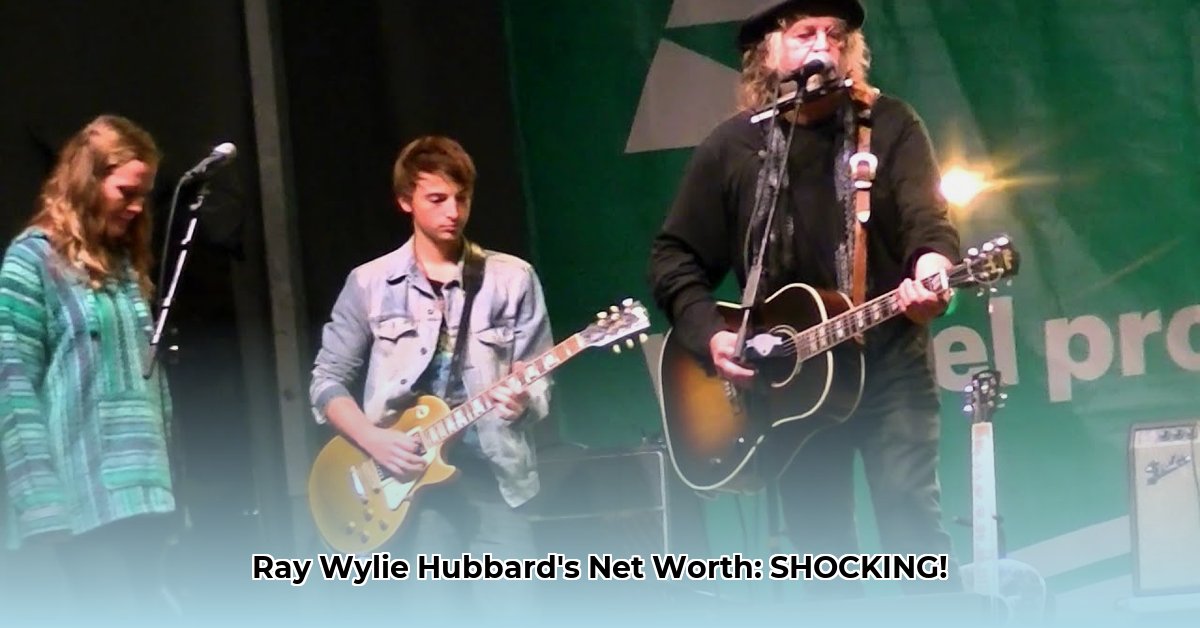
Ray Wylie Hubbard. The name itself evokes dusty Texas roads, the twang of a worn guitar, and stories sung with a whiskey-soaked voice. He's a Texas Country and cowpunk icon, a songwriter's songwriter, whose career spans decades. But pinning down his net worth? That's a challenge as unpredictable as a West Texas thunderstorm. Estimates range wildly—from a modest $100,000 to a more substantial $1 million—a testament to the opaque nature of the music industry and the difficulty in assessing a musician's true financial worth. For comparison, check out Brad Paisley's net worth. This isn't just about numbers; it's a journey through the life of a true artist.
A Life in Song: From Humble Beginnings to Rock Royalty Collaborations
Hubbard's career wasn't a Hollywood fairytale. He's a master storyteller, and his journey reflects the grit and resilience embedded in his music. Early albums like Loco Gringo's Lament laid the foundation for his distinctive sound: a potent blend of country, folk, and rock. But early success was far from guaranteed. He honed his craft, gigging tirelessly in small clubs, building a loyal following one song, one show at a time. Financial success, like widespread recognition, took time.
Later collaborations, however, marked a turning point. Sharing stages and studios with iconic figures like Ringo Starr and Joe Walsh significantly expanded his reach and, consequently, his earning potential. Each album release, every live performance, every song penned: these were all building blocks that contributed to his financial standing. Yet unlike publicly traded companies, musicians' earnings are rarely public knowledge. This lack of transparency makes precise net worth calculations, at best, educated guesswork.
The Elusive Number: Decoding the Complexities of a Musician's Finances
So, what's Ray Wylie Hubbard's actual net worth? The broad spectrum of estimates – anywhere from $100,000 to $1 million – highlights the inherent difficulty in assessing a musician's wealth. The music industry, even for established artists, lacks financial transparency compared to other industries. We don't see public financial statements from musicians like we do from corporations. Several factors contribute to this:
- The Streaming Revolution: Streaming services, while providing immense reach, offer artists minuscule payments per play. This contrasts sharply with previous models, such as physical album sales, which provided a more direct and sizable return.
- Complex Record Deals: The terms and structures of record deals are often convoluted, involving multiple parties and varying payout schemes, adding another layer of difficulty to simple financial assessment.
- Hidden Income Streams: Analyzing a musician’s wealth requires considering diverse income sources, such as album sales, live performances, songwriting royalties (which can be substantial if a song becomes a hit), merchandise sales, and potential endorsement deals or other business ventures. It's a multifaceted financial calculation.
Unpacking the Income Streams: A Multi-Faceted Revenue Model
To form a clearer (though still incomplete) picture, let's examine Hubbard's likely income sources:
- Live Performances: His extensive touring, ranging from intimate club gigs to larger festivals, significantly contributes to his revenue. Larger venues naturally lead to greater earnings.
- Record Sales: While digital streaming has eclipsed physical sales, album sales—especially for dedicated fans—still represent a recognizable income stream. Add to that merchandise sales at shows, which further contribute to his overall revenue.
- Songwriting Royalties: This is a substantial, yet often invisible, component of Hubbard's earnings. Royalties earned through his work appearing in movies, TV shows, commercials, or being covered by other artists form a powerful—and, to an extent, passive—income.
- Merchandise Sales: The sale of branded t-shirts, CDs, and other merchandise, particularly during tours, offers a consistent, albeit smaller, income source.
Each of these income streams fluctuates independently, making the overall financial picture dynamic and difficult to pinpoint precisely.
The Intangible Assets: A Legacy Beyond Financial Figures
Beyond the readily quantifiable income streams, Hubbard possesses priceless intangible assets: his reputation, his legacy, and his enduring influence on Texas music. His status as a beloved artist and songwriter is invaluable, enhancing his earning potential in ways that are difficult to measure monetarily. This brand recognition creates opportunities for future collaborations, endorsements, and sustained income from previous work, making it a key component of his overall financial success. It’s the invisible hand of legacy helping to sustain a career.
The Bottom Line: A Continuing Story
Determining Ray Wylie Hubbard's net worth with precision is a challenging endeavor, perhaps even impossible without full access to his private financial records. The lack of transparency that permeates the music industry, the many income streams, and the constant shifting landscape of the business combine to make accurate financial estimations incredibly difficult. However, the lack of a definitive number doesn't diminish his lasting contributions to music and culture. His story, a testament to decades of dedication and artistic integrity, is a legacy far more valuable than any number on a balance sheet. The financial narrative is still unfolding. His career, and his musical influence, continue.